
A Drive Around Lake Muskoka: The Long Way, Beautifully Done
There are faster ways to get around Muskoka. There are also none worth taking. The loop around Lake Muskoka is one of those rare drives that rewards a slow pace — where the route itself is the experience, and every bend in the road reveals something worth stopping for. Whether you're here for a weekend or settling in for the season, this is the journey we recommend to every guest who asks how to truly feel the lake.
Begin at Taboo
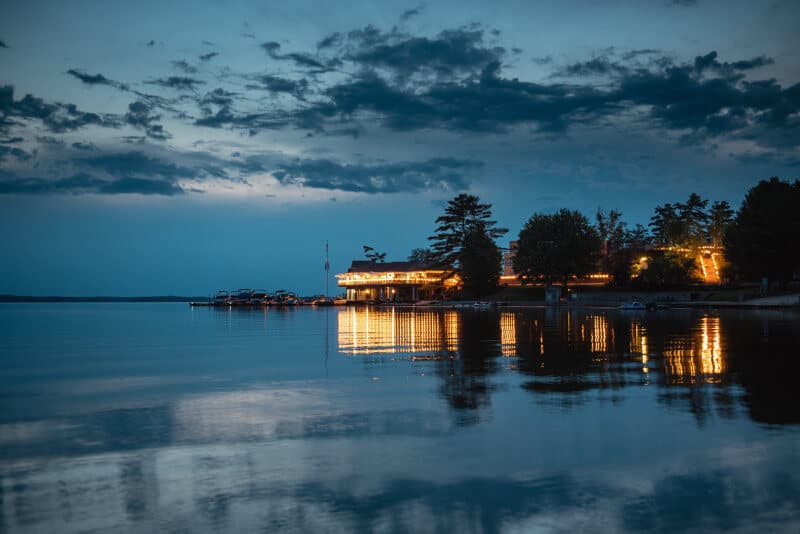
Taboo Muskoka is the ideal starting point — not just geographically, but in spirit. Step off the property and you're already immersed in the landscape: the Canadian Shield rock, the towering pines, the shimmer of the lake through the trees. From here, the full loop unfolds naturally, threading through four of Muskoka's most distinctive towns and some of the most quietly spectacular scenery in Ontario.
Set aside a full day. This is not a drive to rush.
A Worthy Detour: Muskoka Brewery
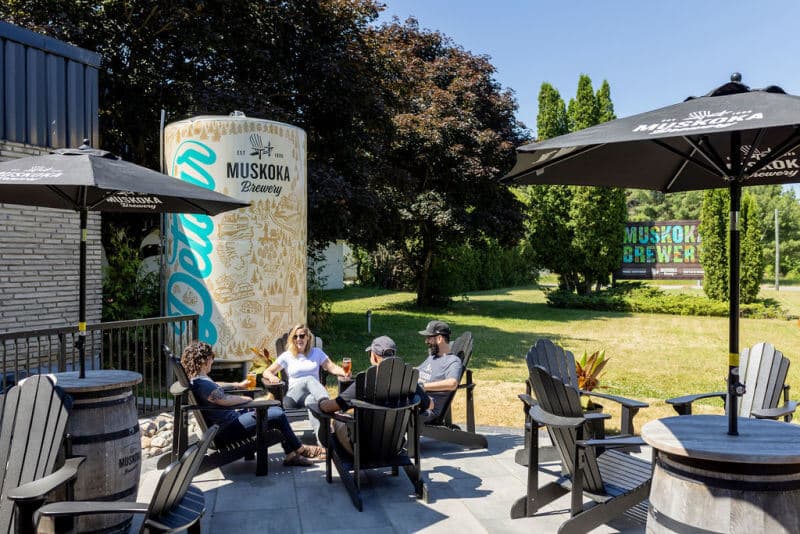
Just before you reach Bracebridge, keep an eye out for Muskoka Brewery — one of Ontario's most beloved craft breweries and a landmark in its own right. Even if you're not stopping in, there's something satisfying about driving past the source of a cold Detour Ale you may have already enjoyed on the Taboo dock. If you are stopping, the taproom is warm, unpretentious, and pours a rotating selection of small-batch releases worth trying alongside a proper Muskoka lager. Consider it a preview of the town ahead.
Bracebridge: A Town Built Around Beauty
Bracebridge announces itself with water. The Muskoka River cuts right through the heart of town, and the Bracebridge Falls — visible from the road, impossible to drive past without stopping — are one of those sights that earns the word spectacular without any exaggeration. In spring they roar; in summer they settle into something more serene. The walking trail alongside them takes no more than twenty minutes and sets the tone for the rest of your time here: unhurried, grounded, quietly impressive.
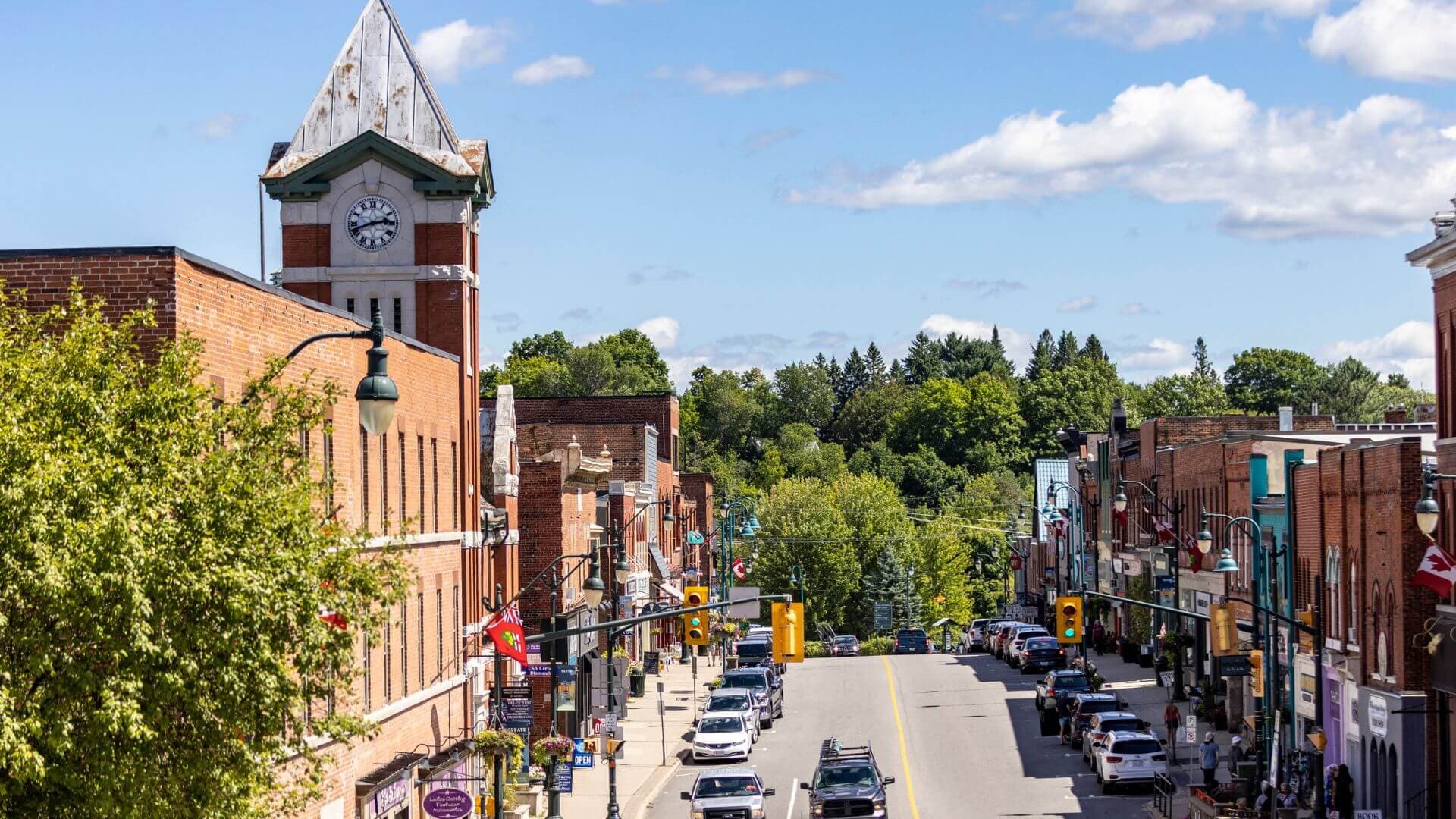
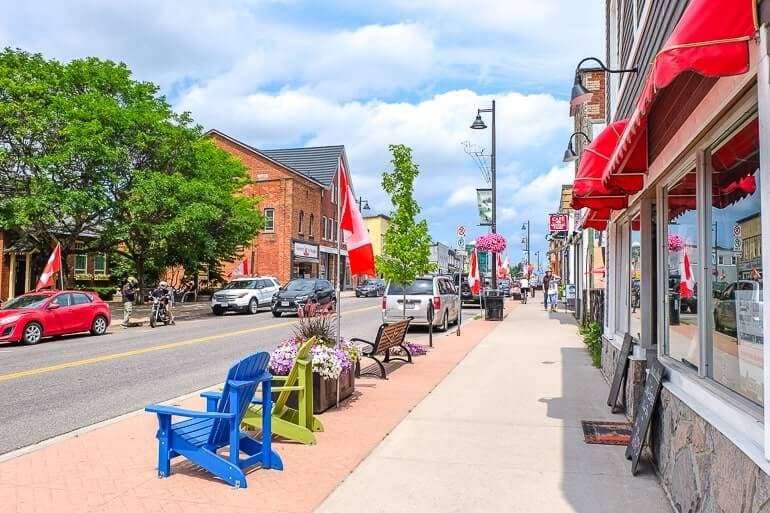
From the falls, the town opens up naturally. Manitoba Street is Bracebridge's main artery and one of the more charming commercial streets in cottage country — lined with independent bookshops, home goods stores, local clothing boutiques, and the kind of café that takes its beans seriously. It's the sort of street that rewards the absence of a plan. Walk it slowly, duck into whatever catches your eye, and don't be surprised if you spend longer here than intended.
The Saturday Farmers' Market, running from late spring through fall, is a genuine reflection of the community around it. Local honey producers, small-batch preserves, fresh-cut flowers, handmade soaps, artisan bread — the quality is high and the atmosphere is warm. If your timing works out, it's one of the best hours you can spend in Muskoka.
Bracebridge is also home to Santa's Village, a Muskoka institution that has been delighting families since 1955. Set along the Muskoka River, it's equal parts nostalgia and genuine charm — the kind of place that means something different depending on how old you are when you visit. If you're travelling with children, it's a non-negotiable stop. If you're not, it's still worth a slow drive past, if only to appreciate how naturally something so whimsical belongs to the landscape around it.
For dining, Bracebridge quietly over-delivers. The restaurant scene here tends toward the personal and the seasonal — chef-driven spots where the menu changes with what's available and the service feels like hospitality rather than performance. Whether you're sitting down for a proper lunch or picking up something for the road, the town has a way of feeding you well.
A detail worth knowing: Bracebridge sits at the geographic centre of Ontario, a fact the locals mention with a certain understated pride. There's something fitting about that — it has the easy confidence of a town that knows exactly what it is and has no interest in being anything else.
Port Carling: Where the Lakes Meet
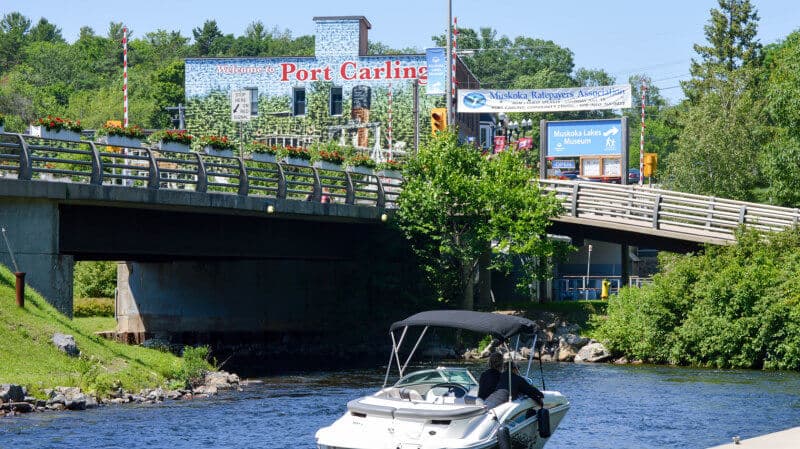
Port Carling occupies a privileged position at the confluence of lakes Muskoka, Rosseau, and Joseph, which makes it feel like the natural centre of the cottage world — because it is. Everything in this town orients itself around water: the streets, the docks, the sightlines, the conversation. Spend an afternoon here and you'll understand why it has quietly become one of the most sought-after addresses in Ontario cottage country.
Begin at the locks, where the waterways between the three lakes are connected by a hand-operated channel that dates back to the 1870s. In summer, boats of every description — gleaming wooden classics, sleek modern cruisers, the occasional canoe — queue patiently to make the crossing. It's unhurried and genuinely mesmerizing. Pull up a bench and watch for a while. Nobody is in a rush, and neither should you be.
From the locks, the village unfolds along a compact and walkable main street that rewards browsing. The galleries and design shops here sit well above the typical resort-town standard — expect thoughtfully curated local art, handmade ceramics, fine jewellery, and home objects that carry a real sense of place. This is the kind of shopping that doesn't feel like shopping: you wander in looking for a gift and leave having found something for yourself. Don’t forget to check out the antique stores in town for some nostalgia.
For dining, Port Carling has developed a reputation that draws people from across the region. The best tables in town tend toward seasonal menus built around what's local and what's fresh, served in settings where the view is half the experience. Whether you're stopping for a long lunch on a sun-drenched patio or ducking in for a coffee and something house-made, the standard here is consistently high.
The waterfront itself is worth lingering on. The public dock offers one of the finest views in Muskoka — the lake spreading out between the islands, the boats moving slowly in every direction, the shoreline thick with cedar and pine. It's a scene that hasn't changed in its essential character for a hundred years, and all the better for it.
Worth knowing: Port Carling can be busy on summer weekends. Arriving mid-morning on a weekday, or later in the afternoon when the day-trippers have moved on, gives you the town at its most gracious
Bala: Small Town, Big Character
Bala is the kind of place that feels like a secret even though everyone seems to know about it. Tucked where the Moon River flows out of Lake Muskoka, it has the unhurried energy of a town that has never needed to try too hard — and all the more character for it. There are no pretensions here, no attempt to be something it isn't. What Bala offers is something rarer: a genuine sense of place, shaped by water, music, and more than a century of summers well spent.
The Bala Falls are the first thing that stops you. Straddling both sides of the main road, they are dramatic in spring when the water runs high and fast, and quietly beautiful through the rest of the season — a constant, unhurried presence at the centre of town. The short loop around the falls is one of those walks that feels longer than it is, in the best possible way. Linger here. The sound alone is worth it.
The town is also home to the legendary Kee to Bala, one of the oldest continuously operating dance halls in Canada. Since 1942, its wooden floors have held an almost improbable roster of performers — Louis Armstrong, The Rolling Stones, Supertramp, and generations of Muskoka summers in between. The building itself carries that history in every beam and floorboard. Even if there's no show on the night you pass through, it's worth stopping to take it in. This is living cultural heritage, and Bala wears it with remarkable ease.
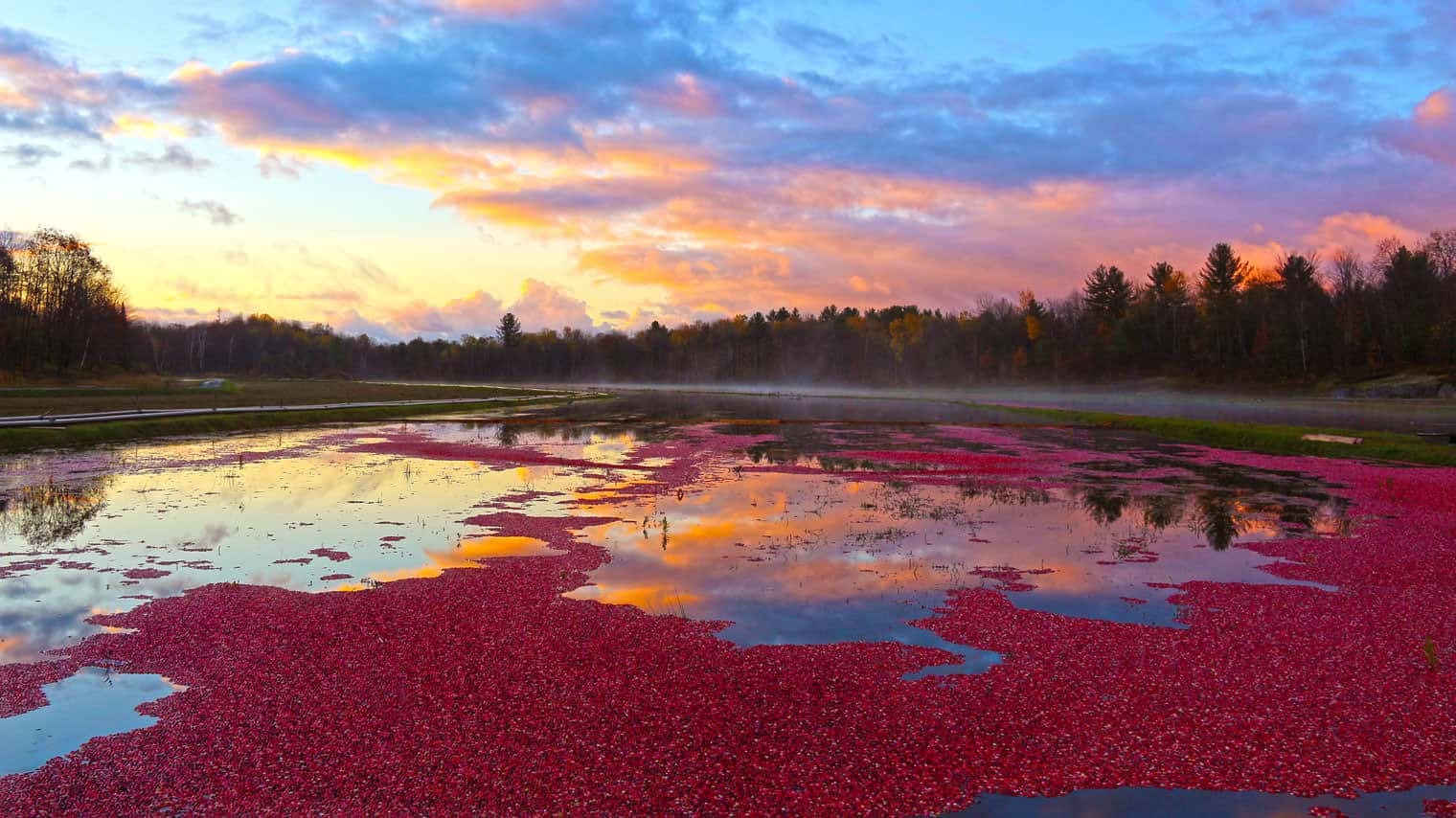
For something more edible, Bala sits at the heart of Ontario's cranberry country. The bogs surrounding the town are among the most productive in the province, and the harvest in October draws visitors from across the region for the annual Bala Cranberry Festival — a weekend celebration of local food, music, and the particular beauty of the bogs when the berries are floating red across the water. Year-round, local cranberry products — preserves, sauces, wines, and more — are available in town and make for the kind of souvenir that actually gets used.
The main street, modest in scale but warm in character, has a handful of independent shops and casual dining spots that suit the town perfectly. Nothing is over-designed or over-priced. It feels like a place where the same families have been coming for decades — because they have.
Don't leave without: A quiet moment by the Moon River itself, downstream from the falls, where the water slows and the light through the trees is exactly what you'd paint if someone asked you to paint Muskoka.
Gravenhurst: History, Water, and a Proper Finish
Gravenhurst is where Muskoka's story formally begins, and arriving here at the end of the loop feels exactly right. There's a subtleness to this town — a sense that it has been doing this for a long time and sees no reason to change — that makes it a deeply satisfying place to finish a day on the road.
Head first to the Muskoka Wharf. The iconic crimson steamships that have worked these waters since the nineteenth century are docked here, and even if you don't board one, the waterfront has an atmosphere that is hard to replicate: the smell of the lake, the creak of the docks, the particular light that bounces off the water in the late afternoon. The RMS Segwun, at the Muskoka Discovery Centre, the oldest operating steamship in North America, is the crown jewel — a vessel that has been carrying passengers across these lakes since 1887. Whether you take a cruise or simply walk the length of the wharf, it's a connection to Muskoka's history that feels entirely alive.
The wharf itself has been thoughtfully developed over the years into a destination in its own right. Boutique shops, galleries, and a handful of dining options line the boardwalk, all oriented toward the water. It's the kind of place you wander through without a plan and end up spending an hour longer than intended.
From the wharf, the town's main street draws you naturally inland. Gravenhurst has a quietly excellent independent retail scene — bookshops, home goods, local art, and clothing boutiques that reflect the sensibility of the community rather than the demands of mass tourism. The Gravenhurst Opera House, built in 1901 and one of the oldest in Ontario, anchors the cultural life of the town with a year-round programme of theatre, music, and community events. Even passing by on the outside, it carries a certain weight — a reminder that Muskoka has always been a place people come to for more than just the scenery.
Gravenhurst is also the birthplace of Norman Bethune, the pioneering surgeon whose medical innovations changed the treatment of battlefield wounds in the twentieth century. The Bethune Memorial House, a National Historic Site, tells his remarkable story and is worth the short detour for those with an hour to spare.
Just a short drive from the wharf, Gull Lake Park is one of Gravenhurst's most beloved green spaces — and one of the most underappreciated spots in all of Muskoka. A beautifully maintained public park right on the water, it has sandy swimming areas, shaded picnic grounds, and the kind of easy, timeless atmosphere that makes an hour here feel like a full afternoon. Families spread out on the grass, kayakers push off from the shore, and the lake stretches out ahead of you with nothing demanding your attention. It is, in the best possible way, a place to simply be.
On summer evenings, Gull Lake Park comes alive with Music on the Barge — a beloved local tradition where live performances are staged on a floating barge anchored just offshore, with the audience gathered on the hillside above the water. The setting is unlike anything else in the region: the sound carries beautifully across the lake, the light fades slowly behind the treeline, and the whole evening has the relaxed warmth of a community that knows how to enjoy where it lives. If your visit coincides with a performance night, rearrange your plans accordingly. It is not to be missed.
Pro Tip: Make sure stop at Muskoka Beach for a great instagrammable moment with a great shot of the Taboo Muskoka in the background.
The Return
The drive back to Taboo from Gravenhurst follows the shoreline home, the water catching the last of the day's light. It's the kind of drive that recalibrates something. We find most guests want to do it again before they leave.
A Few Notes Before You Go
- Leave early. The back roads are quietest in the morning, and the light rewards those who catch it.
- Carry cash. The farmstands and some of the smaller makers don't take cards.
- Allow for detours. The best discoveries on this drive are never on the map.
Culinary Delights on Lake Muskoka
Enjoy elevated dining with unforgettable views of Lake Muskoka. Book your table today.